Map of Asia in 1000

Asia around the year 1000
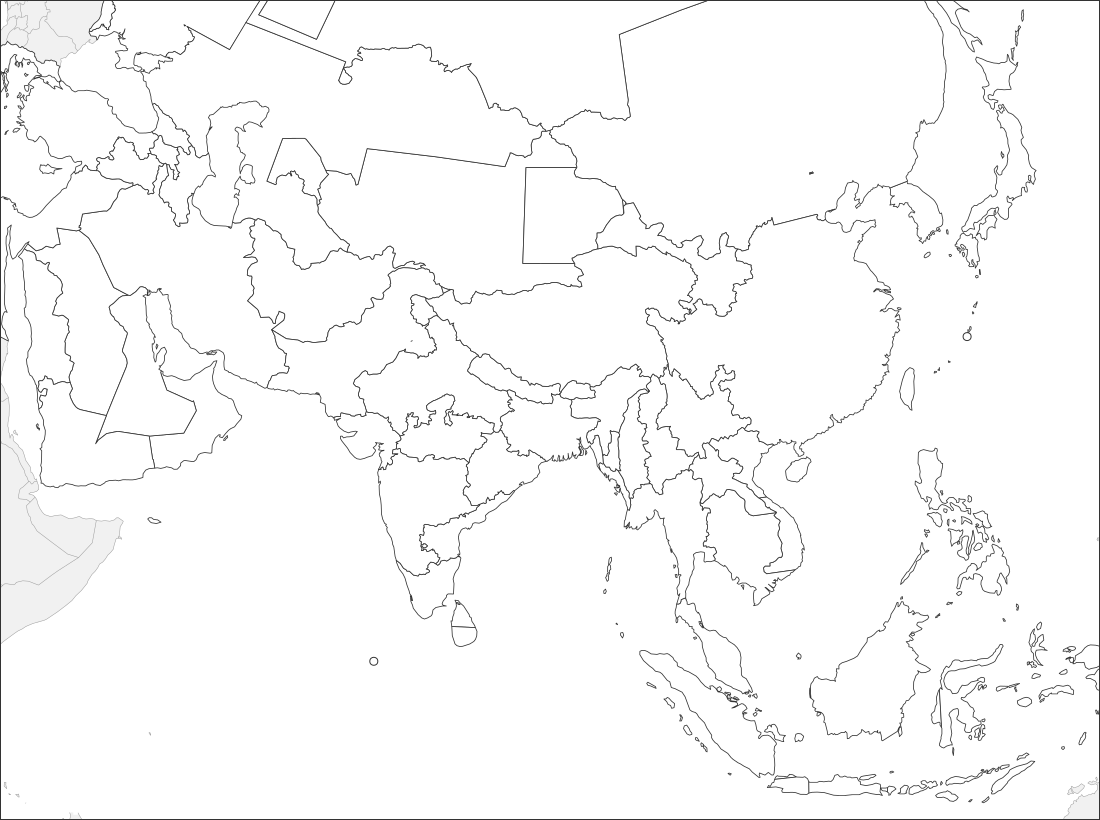
Asia around 1000: while Europe was in the Middle Ages, Asia had the world's richest and most populous states: Song China, the Chola Empire in southern India, Angkor and Heian Japan, while the Islamic world was split between caliphates and emirates.
- In China the Northern Song (960) was the world's richest and most populous state, but to the north the Khitan Liao dynasty held the Beijing region and Mongolia; in 1005 they signed the Treaty of Chanyuan.
- In the Islamic world the Abbasid caliph in Baghdad was a figurehead under the Buyid emirs, the Fatimids ruled Egypt and Syria from Cairo (founded in 969) and Mahmud of Ghazni was building the Ghaznavid Empire from Afghanistan.
- In southern India the Chola emperor Rajaraja I (985–1014) built the Brihadisvara temple at Thanjavur and conquered the north of Sri Lanka; his son would send a fleet against Srivijaya in 1025.
- In Southeast Asia Srivijaya controlled the Strait of Malacca, Angkor was growing under Suryavarman I (from 1002) and Đại Cồ Việt was independent of China. Peoples with no state are marked “no capital”; the outlines are a rough guide and the population figures are estimates used only to compare.
How it is made: the coasts are today's, and the borders follow today's divisions where they match those of the time and, where they do not, lines drawn by hand, good to about 10 km. Shapes: Natural Earth (public domain). Compare with today's Asia →
Facts: the map of Asia in 1000
- On the map
- 57 countries · 2 are so small they show as a dot (complete level)
- Largest country
- Peoples of Siberia and the Arctic (≈ 12,000,000 km²)
- Smallest country
- Ryukyu Islands (≈ 2,300 km²)
- Most populous country
- Song dynasty (Northern Song) (≈ 65,000,000 people)
- Least populous country
- Indian Ocean islands (Maldives, Andaman, Nicobar) (≈ 50,000 people)
- Northernmost capital
- No capital (Peoples of Siberia and the Arctic)
- Southernmost capital
- Watugaluh (Medang Kingdom (East Java))
- Most neighbours
- Tibetan principalities (Guge and others): 11
- No land border with another country on the map
- Chiefdoms of the Philippines, Indian Ocean islands (Maldives, Andaman, Nicobar), Ryukyu Islands, and Taiwan's indigenous peoples
Fun facts: Map of Asia in 1000
- Kaifeng, the Song capital, had perhaps a million people, one of the biggest cities in the world.
- The Tale of Genji, often called the world's first novel, was written in Heian Japan around 1010 by Murasaki Shikibu.
- Paper money appeared in Song China in the 11th century, first in Sichuan.
- The Brihadisvara temple of Thanjavur, built by Rajaraja Chola, was finished in 1010 and is still in use.
- Mahmud of Ghazni raided northern India 17 times, and his court poet Ferdowsi finished the Shahnameh in 1010.
Test yourself
Which was the largest country of Asia in 1000?
Peoples of Siberia and the Arctic.
Which was the most populous country of Asia in 1000?
Song dynasty (Northern Song).
Which was the smallest country of Asia in 1000?
Ryukyu Islands.
Which was the least populous country of Asia in 1000?
Ainu (Ezo).
Printable blank map: Map of Asia in 1000
Print this blank map for free for class or self-study, then play the game to check your answers.
More maps
The countries on the map of Asia in 1000, and what they are today
Today's countries that cover a good part of its land, largest share first.
Show the table (57)
| Country | Capital | Today part of |
|---|---|---|
| Ainu (Ezo) | No capital | Russia, Japan |
| Arakan (Chandra dynasty) | Vesali | Myanmar |
| Bagratid Kingdom of Armenia | Ani | Armenia, Turkey |
| Bamar principalities of Pagan | Pagan | Myanmar |
| Bedouin tribes of Arabia | No capital | Saudi Arabia |
| Buyid emirates (the Abbasid caliphate in name) | Shiraz | Iran, Iraq |
| Byzantine Empire | Constantinople | Turkey, Greece, Cyprus |
| Champa | Indrapura | Vietnam |
| Chaulukya of Gujarat | Anahilapataka | India |
| Chiefdoms of the Philippines | No capital | Philippines |
| Chola Empire | Thanjavur | India, Sri Lanka |
| Đại Cồ Việt (Lê dynasty) | Hoa Lư | Vietnam |
| Eastern Chalukya (Vengi) | Vengi | India |
| Eastern Indonesia (Bali, Sulawesi, Maluku…) | No capital | Indonesia, Timor-Leste |
| Emirates of Yemen (Ziyadids, Yu'firids) | Zabid | Yemen, Saudi Arabia |
| Fatimid Caliphate | Cairo | Egypt, Saudi Arabia, Syria, Jordan, Israel, Lebanon, Palestine |
| Ghaznavid Empire | Ghazni | Afghanistan, Iran |
| Hill peoples (Shan, Kachin, Chin) | No capital | Myanmar |
| Hindu Shahis and the Indus lands (Multan, Mansura) | Udabhandapura (Hund) | Pakistan, India |
| Ibadi Imamate of Oman | Nizwa | Oman, United Arab Emirates |
| Indian Ocean islands (Maldives, Andaman, Nicobar) | No capital | India |
| Japan (Heian period) | Heian-kyō (Kyoto) | Japan |
| Kamarupa and the north-eastern kingdoms | Pragjyotishpura (Guwahati) | India |
| Kara-Khanid Khanate | Balasagun | China, Kazakhstan, Uzbekistan, Kyrgyzstan, Tajikistan |
| Kashmir (Lohara dynasty) | Srinagar | India |
| Khmer Empire | Angkor | Thailand, Cambodia, Vietnam, Laos |
| Khwarazm (the Ma'munids) | Gurganj | Uzbekistan |
| Kievan Rus | Kyiv | Russia, Ukraine |
| Kingdom of Dali | Dali | China |
| Kingdom of Georgia (Abkhazia and Kartli) | Kutaisi | Georgia |
| Korea (Goryeo) | Gaegyeong (Kaesong) | South Korea, North Korea |
| Kurdish emirates (Marwanids and others) | Mayyafariqin | Turkey |
| Lao principalities | No capital | Laos |
| Liao dynasty (Khitan) | Shangjing | Russia, China, Mongolia, North Korea |
| Medang Kingdom (East Java) | Watugaluh | Indonesia |
| Mon kingdoms (Dvaravati, Haripunjaya, Thaton) | Haripunjaya (Lamphun) | Thailand, Myanmar |
| Nepal and the Himalayan principalities | Kathmandu | Nepal, Bhutan, India |
| Odisha and Kosala (Somavamshi) | Yayatinagara | India |
| Pala Empire | Pataliputra (Patna) | India, Bangladesh |
| Paramara of Malwa | Dhar | India |
| Peoples of Borneo | No capital | Indonesia, Malaysia, Brunei |
| Peoples of Siberia and the Arctic | No capital | Russia |
| Pratihara remnants and Rajput kingdoms | Kannauj | India |
| Qarmatians of Bahrain (Al-Ahsa) | Al-Mu'miniya (Hofuf) | Saudi Arabia, Kuwait, Qatar |
| Rawadids and Shirvanshahs (Azerbaijan) | Tabriz | Iran, Azerbaijan |
| Ruhuna (Sinhalese Sri Lanka) | Tissamaharama | Sri Lanka |
| Ryukyu Islands | No capital | Japan |
| Song dynasty (Northern Song) | Kaifeng | China |
| Srivijaya | Palembang | Indonesia, Malaysia, Thailand |
| Steppe peoples (Oghuz, Kipchak, Pecheneg) | No capital | Kazakhstan, Russia, Turkmenistan, Moldova |
| Sunda Kingdom (Galuh) | Galuh | Indonesia |
| Taiwan's indigenous peoples | No capital | Taiwan |
| Tanguts (the future Western Xia) | Lingzhou | China |
| Tibetan principalities (Guge and others) | No capital | China, India |
| Uyghur Kingdom of Qocho | Qocho (Turpan) | China |
| Volga Bulgaria | Bolghar | Russia |
| Western Chalukya | Kalyani | India |